

What is Hot Work Steel?
In the world of industrial manufacturing, some environments are simply too extreme for standard materials. When tools are subjected to searing heat, massive mechanical pressure, and rapid thermal cycling, ordinary steel degrades rapidly. This is where hot work tool steel comes into play. As a specialized category of alloy, these steels are the unsung heroes behind the production of everything from automotive engine blocks to aluminum window frames.
At Nantian, we understand that selecting the right material is critical for operational efficiency. While we have previously discussed What is Cold Work Steel? and its applications at room temperature, hot work steel is a different beast entirely. It is engineered to perform when the heat is on—literally.
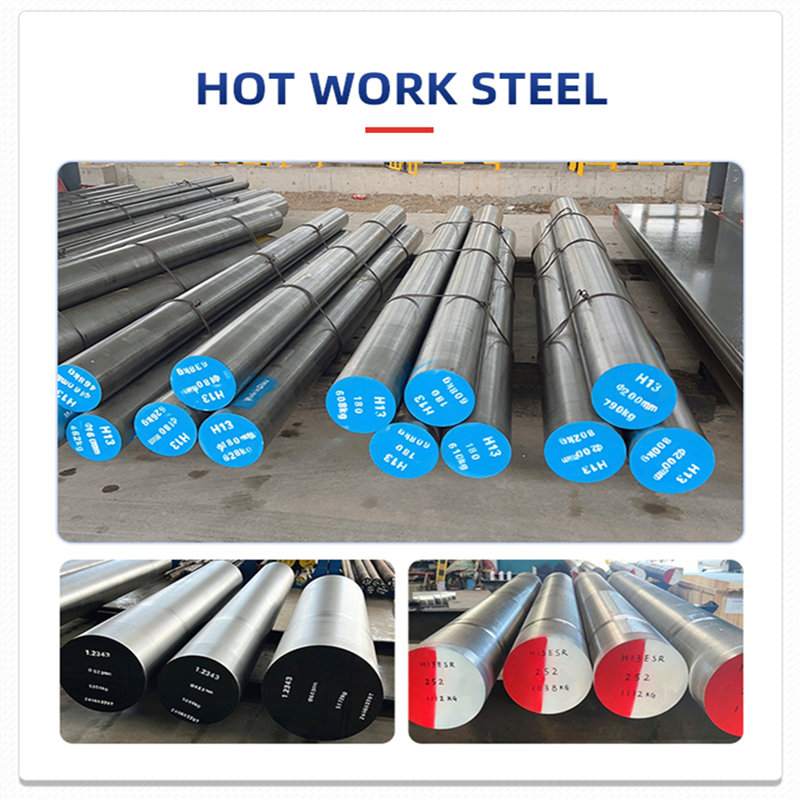
Defining Hot Work Steel
Hot work steel refers to a group of high-performance alloys specifically designed to maintain their physical integrity at elevated temperatures, typically above 200°C (400°F). These materials are the foundation of metal hot working processes, where workpieces are shaped while red-hot.
This category of steel is characterized by three primary attributes:
Red Hardness: The ability to resist softening even when exposed to prolonged high heat.
Thermal Shock Resistance: The capacity to withstand rapid heating and cooling cycles without cracking (known as heat checking).
High Toughness: The strength to resist mechanical impact and erosion under extreme conditions.
Applications and Processes
Because of these robust properties, hot worked metal tools are indispensable in heavy manufacturing sectors. Common applications include:
Pressure Die Casting: Producing complex parts from molten aluminum, magnesium, or zinc.
Forging: Hammering or pressing heated metal into high-strength components.
Extrusion: Pushing heated billets through a die to create long profiles (like pipes or beams).
Glass Manufacturing: Tools that shape molten glass.
In the hot working of steel and other non-ferrous metals, the tool surface may intermittently reach temperatures exceeding 600°C. Standard carbon steels would soften and deform instantly in such an environment, leading to catastrophic tool failure. Hot work grades, however, stand firm.
The Metallurgy Behind the Heat Resistance
What makes these steels so resilient? The secret lies in the precise alloy composition. Nantian's hot work tool steel is meticulously formulated with key alloying elements:
Chromium (Cr): Provides oxidation resistance and hardenability.
Molybdenum (Mo): Increases high-temperature strength and red hardness.
Tungsten (W): Adds exceptional resistance to softening at high heat.
Vanadium (V): Improves wear resistance and grain structure stability.
By balancing these elements, we create a material that offers high hot-yield strength and ductility, ensuring your dies and molds last longer, reducing downtime and replacement costs.
Frequently Asked Questions (FAQ)
Yes. Hot working tool steel requires a precise heat treatment cycle involving quenching and tempering. We typically recommend vacuum hardening followed by multiple tempering cycles. This ensures the microstructure transforms correctly to provide the optimal balance of toughness and heat resistance. Nantian provides detailed heat treatment guidelines with every batch we ship.
While European brands like Uddeholm and Bohler are historically famous, Chinese manufacturers like Nantian have closed the quality gap significantly. We use advanced refining technologies (like ESR - Electroslag Remelting) to produce forging steels that rival Western standards in purity and performance, but at a more competitive price point.
The two most common grades are H13 and H11. H13 is the industry standard for aluminum die casting due to its excellent resistance to thermal fatigue (heat checking). H11 offers slightly better toughness but lower wear resistance. For extreme conditions, premium grades like H21 (tungsten-based) might be considered, though H13 remains the versatile workhorse for most hot worked steel applications.
Certainly. H13 is the best all-rounder for die casting and extrusion. H11 is preferred for high-impact forging dies where toughness is prioritized over heat resistance. H21 is used for very high-temperature applications but is brittle. Choosing the right grade depends on your specific failure mode: is your tool cracking (need toughness) or washing out (need wear resistance)?
Focus on the casting material. For aluminum and magnesium, H13 is the go-to choice. Look for steel that has been ESR processed (Electroslag Remelted). This process removes impurities, improving the steel's polishability and resistance to thermal cracking, which is vital for high-quality die cast surface finishes.
Major US suppliers often distribute steel from global mills. While there are domestic producers, many US toolmakers rely on trusted international partners for raw material. Nantian supplies many distributors in the US market, providing high-grade steel that meets AISI/ASTM standards seamlessly.
The most critical property is thermal stability—the steel must not lose its hardness when heated. Secondly, it needs high thermal conductivity to dissipate heat away from the working surface efficiently. Finally, good machinability is essential so that complex die shapes can be produced cost-effectively.
Prices fluctuate based on the alloy market (specifically Molybdenum and Vanadium prices). Generally, premium ESR-grade H13 will command a higher price than standard grades. As a direct manufacturer, Nantian offers factory-direct pricing that eliminates middleman markups, providing significant savings for bulk orders.
Look for suppliers who offer full traceability and mill test certificates (MTC). At Nantian, we verify every heat with rigorous testing for chemical composition and ultrasonic inspection. You can source directly from us for reliable, high-quality export service.
For immediate small quantities, local steel service centers are best. However, for manufacturing runs or stocking requirements, importing directly from Nantian ensures you get the exact dimensions and grades you need. We handle the logistics to deliver directly to your facility or nearest port.
Conclusion
Hot work steel is the backbone of high-temperature manufacturing. Whether you are forging, casting, or extruding, the quality of your tool steel directly impacts your productivity and profitability. By choosing a specialized manufacturer like Nantian, you gain access to world-class alloys engineered to withstand the toughest conditions.
Contact us today to discuss your specific requirements, from H13 plates to custom forgings. Let us help you keep your production running, no matter how high the temperature gets.