

What is Cold Work Steel? A Deep Dive into High-Performance Metallurgy
In the demanding world of industrial manufacturing, the materials you choose form the foundation of your success. Whether you are producing intricate automotive parts, precision electronics, or heavy-duty construction components, the integrity of your tooling dictates the quality of your output. At Nantian, with decades of experience as a premier steel manufacturer, we understand that selecting the right material is not just a purchase—it is an investment in efficiency.
Today, we are exploring one of the most vital categories in our catalog: cold work tool steel. This material is the workhorse of the tooling industry, specifically engineered for applications where surface temperatures do not exceed 200°C (400°F). Unlike its hot-work counterparts, which are built to withstand thermal shock, cold work steel focuses on high compressive strength, superior wear resistance, and exceptional dimensional stability.
Defining Cold Work Steel
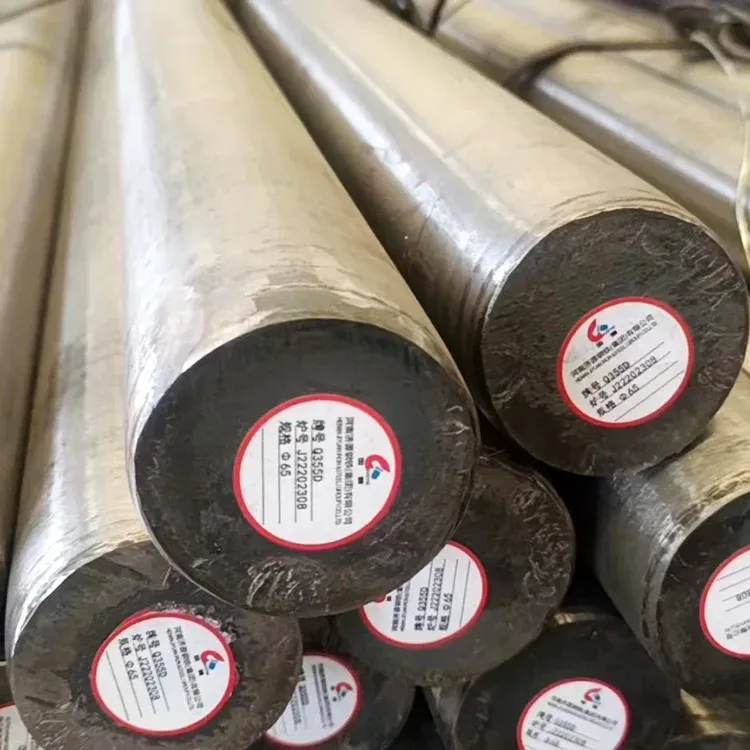
Cold work steel is a high-carbon steel alloy designed for use in tools that cut, shear, form, or blank materials at room temperature. The primary objective of cold working of steel is to alter the shape of a workpiece without the application of heat, relying instead on mechanical force. Consequently, the tools used in these processes must possess high hardness to resist deformation and high toughness to prevent chipping under impact.
To understand the specific classification and hierarchy of these materials, it is helpful to first understand the broader category. You can read more in our guide on what is tool steel to see how cold work grades fit into the larger family of high-performance alloys.
The Metallurgy Behind the Metal
What gives cold work steel its legendary durability? The secret lies in the chemical composition. To achieve the necessary mechanical properties, these steels are heavily alloyed. The most common alloying elements include:
Carbon (C): The defining element for hardness. High carbon content allows the steel to achieve high Rockwell hardness (HRC) after heat treatment.
Chromium (Cr): Adds wear resistance and hardenability. In grades like D2, high chromium content also provides mild corrosion resistance.
Vanadium (V): Promotes a fine grain structure and forms extremely hard vanadium carbides, which significantly boost abrasion resistance.
Tungsten (W) & Molybdenum (Mo): These elements improve the steel's hardenability and toughness, ensuring the tool does not crack under the immense pressures of metal cold working.
Key Properties and Characteristics
When engineering cold worked steel tools, manufacturers look for three specific traits. At Nantian, we ensure our manufacturing process optimizes these characteristics:
1. Wear Resistance
This is perhaps the most critical property. In processes like blanking or slitting, the tool scrapes against the workpiece thousands of times an hour. Without high abrasion resistance, the tool edge would dull rapidly, leading to downtime. High-carbon, high-chromium grades are the gold standard here.
2. Compressive Strength
During cold forming, the tool is subjected to tremendous pressure. If the steel lacks compressive strength, it will deform plastically, ruining the dimensional accuracy of the part being produced.
3. Toughness
While hardness is desirable for wear resistance, it can make steel brittle. Toughness is the ability of the material to absorb energy and resist fracturing under impact. A balanced cold working tool steel must withstand the shock of a punch press without shattering.
Common Grades of Cold Work Steel
The industry categorizes these steels into three main groups based on their hardening method and alloy content:
Air-Hardening (A-Series): Grades like A2 are renowned for their balance of wear resistance and toughness. They distort very little during heat treatment, making them safe for complex die shapes.
High-Carbon, High-Chromium (D-Series): The most famous is D2. It offers deep hardening and massive wear resistance due to high carbide volume. It is the go-to choice for long-run dies.
Oil-Hardening (O-Series): Grades like O1 are general-purpose steels. They are easier to machine and offer good wear resistance but are more prone to distortion during quenching compared to air-hardening grades.
Applications in Modern Industry
Cold worked metal components are everywhere, from the chassis of your car to the casing of your smartphone. The tools required to produce these parts rely on high-quality steel from manufacturers like Nantian. Common applications include:
Blanking and Stamping Dies: For cutting sheet metal into specific shapes.
Forming Dies: For bending and shaping metal without removing material.
Shear Blades: For cutting massive rolls of steel or aluminum.
Thread Rolling Dies: Used to form threads on screws and bolts through pressure rather than cutting.
Punches and Knives: High-impact tools used in fabrication.
The Nantian Advantage
As a China-based manufacturer serving the global market, Nantian bridges the gap between premium quality and cost-effectiveness. We utilize advanced electroslag remelting (ESR) technology to purify our steels, ensuring that the microstructure is uniform and free of inclusions. This results in a tool steel that performs consistently, cycle after cycle.
Frequently Asked Questions (FAQ)
While there are many domestic distributors within the US, many of them source their raw materials from global manufacturing hubs. As a direct manufacturer, Nantian supplies high-grade steel to distributors and large-scale industrial end-users in the US, offering factory-direct pricing without compromising on the metallurgical standards (like AISI/ASTM) required by American industries.
If you need immediate stock for small repairs, local service centers are ideal. However, for bulk orders or recurring production needs, sourcing directly from a manufacturer like Nantian is often more strategic. We handle the logistics of shipping cold work tool steel globally, essentially bringing our warehouse to your door.
It depends on the production volume. For short runs, O1 is economical and effective. For medium runs requiring good dimensional stability, A2 is the standard. For high-volume production where abrasion is the main enemy, D2 is superior. For applications involving heavy impact/shock loading, S7 (Shock Resisting) is preferred over standard cold work grades.
We recommend contacting us first. Nantian has a network of partners and can often supply the specific grades needed for cold forming (like D2 or DC53) directly. If you require a grade we do not stock locally, we can manufacture it to your exact specifications.
Historically, brands like Bohler, Uddeholm, and Carpenter are well-known. However, Nantian has emerged as a top contender from China, offering comparable chemical compositions and performance characteristics (often verified by third-party SGS testing) at a more competitive price point for global buyers.
The "Big Three" properties are: Wear Resistance (to hold an edge), Compressive Strength (to resist crushing), and Toughness (to resist chipping). Selecting the right grade involves balancing these. For example, D2 has high wear resistance but lower toughness compared to A2.
O1 requires oil quenching. It should be preheated to 1200°F (650°C), then raised to the hardening temperature of 1450-1500°F (790-815°C). It is then quenched in oil until it reaches roughly 150°F (65°C) and immediately tempered. Proper heat treatment is vital for any cold worked metal tool to perform correctly.
For very small "hobbyist" quantities, online retail metals supermarkers are best. However, Nantian specializes in B2B industrial supply. If you are a machine shop or factory looking for bars, blocks, or plates, our online inquiry system is the most efficient way to secure professional-grade material.
Nantian offers streamlined online ordering for international clients. We maintain a substantial stock of standard sizes for immediate dispatch. While ocean freight takes time, our logistics team ensures the fastest possible routing to US and European ports.
A2 tool steel is widely considered the "jack of all trades." It offers significantly better wear resistance than O1 and better toughness than D2. It is an air-hardening steel, which also means it is safer to heat treat with less risk of cracking or distortion.
Conclusion
Cold work steels provide the backbone for modern manufacturing, enabling the efficient and precise shaping of materials that drive our economy. From the high wear resistance of D2 to the balanced toughness of A2, understanding these materials is key to production success.
At Nantian, we are committed to providing more than just metal; we provide solutions. Whether you are looking for standard Cold Work Tool Steel, Hot Work grades, or specialized Plastic Mould Steel, our facilities in China are ready to meet your global demands with precision and reliability. Contact us today to discuss how we can support your next project.