

In the world of metallurgy and manufacturing, few materials are as critical as tool steel. But for those new to the industry, a fundamental question often arises: what is tool steel, and why is it so indispensable? Essentially, tool steel refers to a family of carbon and alloy steels known for their distinctive hardness, resistance to abrasion, and ability to hold a sharp cutting edge even at elevated temperatures. These properties make them the ideal tool steel material for shaping, cutting, and forming other metals and plastics.
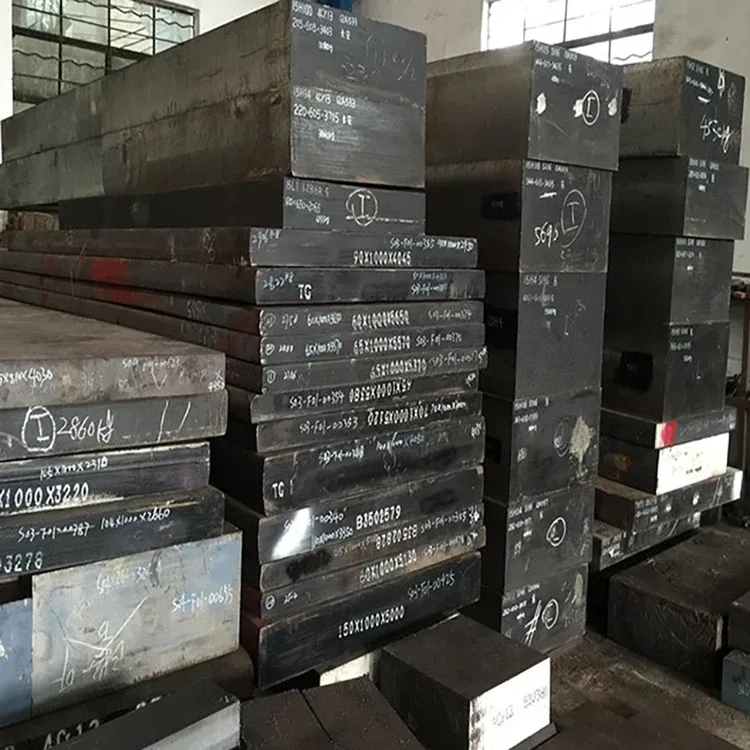
The versatility of tool steel comes from its varying chemical compositions. Depending on the intended application—whether it's stamping, extrusion, or plastic molding—different alloying elements like chromium, molybdenum, tungsten, and vanadium are added. These elements dictate the steel's toughness, wear resistance, and hardenability.
Broadly speaking, there are six primary groups of tool steel: water-hardening, cold-work, shock-resisting, high-speed, hot-work, and special purpose (including plastic mold steel). Choosing the right grade is a balance of cost, working temperature, and required surface hardness. The more severe the service condition—be it high heat or abrasive wear—the higher the alloy content required. As leading tool steel distributors, Nantian understands these nuances and helps clients select the perfect material for their needs.
1. Water-hardening group (W-Group)
The Water-Hardening group, designated as the W-group, gets its name from its defining characteristic: it must be water quenched. This group represents the most basic form of tool steel grades, consisting essentially of high-carbon plain steel. Because it lacks significant alloying elements, it is generally lower in cost compared to other tool steels.
However, low cost does not mean low performance. W-grade steels can attain high hardness levels (often exceeding HRC 66), making them excellent for applications requiring a keen cutting edge. They are frequently used for small parts, cutlery, and tools where high temperatures are not a factor. The limitation lies in their heat resistance; above 150°C (302°F), they begin to soften noticeably. Furthermore, their low hardenability means they are prone to warping and cracking during the rapid water quenching process. While less common in modern heavy industry than they were in the early 20th century, they remain a staple for specific applications like springs and woodworking tools.
2. Cold-work group
The Cold-Work group is designed for applications where the surface temperature of the tool does not exceed 200°C. This group is further divided into three categories based on quenching methods and alloy content: Oil-hardening (O-grades), Air-hardening (A-grades), and High carbon-chromium (D-grades). If you are looking for reliable cold work tool steel china wholesale, understanding these distinctions is vital.
2.1. Oil-hardening (O-Series)
The O-series, particularly the O1 grade, is a very popular general-purpose tool steel. By using oil quenching instead of water, manufacturers can reduce the thermal shock that leads to cracking and distortion. O-series steels offer good abrasion resistance and toughness for a wide range of applications, including blanking dies and gauges. They can typically be hardened to a range of 57-61 HRC.
2.2. Air-hardening (A-Series)
Air-hardening steels (A-series) were developed to offer even greater dimensional stability during heat treatment. Because they can harden in still air, the internal stresses are minimized, resulting in very low distortion. The A2 grade is a standout performer here, offering a balanced combination of wear resistance and toughness. Their high chromium content also provides better hardenability than the O-series.
2.3. High carbon-chromium (D-Series)
2.3.1. D-type
The D-type steels are the heavyweights of the cold-work group. Containing between 10% and 13% chromium, these steels are formulated for high wear resistance. They retain their hardness up to temperatures of 425°C (797°F). Common applications include forging dies, die-casting blocks, and drawing dies.
D2 tool steel is perhaps the most famous in this category. It is incredibly wear-resistant, making it ideal for industrial cutting tools, shear blades, and planer blades. While it is often referred to as "semi-stainless" due to its chromium content, its corrosion resistance is limited because much of that chromium is tied up in carbides.
| A | A2 – A10 | Air hardening, Medium alloys |
| D | D2 – D7 | High carbon, high chromium |
| O | O1 – O7 | Oil hardening, Low carbon |
2.3.2. 1.2767 type
ISO 1.2767 (also known as DIN X 45 NiCrMo 4) represents a specialized niche within cold-work steels. With nickel as a primary alloying element, it offers exceptional toughness and grain stability. It is highly polishable, making it a preferred choice for high-stress plastic injection molding dies and heavy-duty blanking dies.
| Series | Grades | Characteristics |
|---|---|---|
| A | A2 – A10 | Air hardening, Medium alloys, Low distortion |
| D | D2 – D7 | High carbon, high chromium, Max wear resistance |
| O | O1 – O7 | Oil hardening, Low carbon, General purpose |
| AISI Code | AISI Designation | Type of Tool steel |
| W | W1 to W7 | High carbon water hardening steel |
| W1 A – 1B | Carbon | |
| W2 – W3 | Carbon Vanadium | |
| W4 – W5 | Carbon Chromium | |
| W7 | Carbon Chromium Vanadium |
3. Shock-resisting group (S-Group)
As the name implies, the Shock-Resisting (S-group) steels are engineered to withstand impact. While most steel tools prioritize hardness, S-group steels prioritize toughness. They are designed to resist shock at both low and high temperatures, avoiding the chipping and cracking that harder steels might suffer under impact.
These steels typically contain silicon, molybdenum, or nickel to enhance their mechanical properties. While they have lower abrasion resistance than the D or A groups, their ability to absorb energy makes them indispensable for tools like jackhammer bits, chisels, and heavy-duty punches. They generally attain a hardness of HRC 58-60.
4. High speed group (HSS)
High-Speed Steel (HSS) revolutionized machining. Before HSS, cutting tools would soften and lose their edge as friction generated heat. HSS grades, primarily the T-type (Tungsten-based) and M-type (Molybdenum-based), maintain their hardness at elevated temperatures (red hardness). This property allows steel tools made from HSS to cut faster and run hotter than high-carbon steels.
HSS is commonly used for drill bits, power-saw blades, and milling cutters. The addition of cobalt in some grades (like M42) further enhances heat resistance. At room temperature, HSS generally displays high hardness (above HRC 60) and excellent abrasion resistance.
| M | M1, M7, M10 | Molybdenum |
| M30, M33, M34, M42, M43, M46, M47 | Molybdenum, Cobalt | |
| M2, M3, M4 | Molybdenum, Tungsten | |
| M6, M15, M35, M36< M41, M44, M45 | Molybdenum, Tungsten, Cobalt | |
| T | T1, T2, T3, T7, T9 | Tungsten |
| T4, T5, T6, T8, T15 | Tungsten, cobalt |
5. Hot-working group (H-Group)
For processes like aluminum die casting, extrusion, and hot forging, the tool steel must withstand prolonged exposure to intense heat without losing strength. This is the domain of the Hot-Working (H-group) steels.
These low-carbon, moderate-to-high alloy steels utilize tungsten, chromium, and molybdenum to maintain properties at high operating temperatures. H11 and H13 are among the most widely used types of tool steel in this category, offering a good balance of toughness and heat check resistance. For specialized applications requiring extreme heat resistance, you might consider sourcing from a reputable skd7 mold steel factory, as SKD7 (equivalent to H10/H11 class) excels in hot forging environments.
| H | H 10, H11, H12, H13 | Chromium, Molybdenum |
| H14, H16, H19, H23 | Chromium, Tungsten | |
| H20, H21, H22, H24, H25, H26 | Tungsten | |
| H15, H41, H42, H43 | Molybdenum |
6. Special purpose group / Plastic Mold Steel (P-Group)
The final major category includes steels designed for specific industrial niches. The P-type (Plastic Mold Steels) are formulated specifically for zinc die casting and plastic injection molding dies. Grades like P20 are legendary in the industry for their ability to be machined easily and polished to a mirror finish—critical for producing high-quality plastic parts.
Other special purpose steels include the L-type (Low alloy) and F-type (Carbon-Tungsten). L6, for example, is extremely tough and often used for precision parts. F-type steels are water-hardened but offer substantially more wear resistance than standard W-type steels.
| F | F1 | High carbon, low alloys |
| F2, F3 | Tungsten | |
| L | L1, L3, L7 | Carbon > 0.65%, Chromium |
| L2 | Carbon <0.65%, Chromium | |
| L6 | Carbon > 0.65%, Nickel | |
| S | S1, S3 | Tungsten |
| S2, S4, S5, S6 | Silicon | |
| S7 | Chromium | |
| P | P1- P20, P21 | Low carbon mold steel |
Summary
Tool steels are metallurgically "clean," high-alloy materials produced with extreme care to ensure homogeneity and performance. From the basic water-hardening grades to sophisticated high-speed and hot-work alloys, each group serves a distinct role in the manufacturing ecosystem. Whether refined by vacuum methods or electroslag refining (ESR), these materials are the backbone of modern industry.
At Nantian, we specialize in providing high-quality bar products that meet rigorous international standards. Because precision parts may distort during heat treatment, we advise selecting an alloy that provides the necessary mechanical properties with the least severe quench. If you need assistance selecting the right tool steel or have queries about availability, please contact Nantian today.