

In the grand tapestry of the global economy, few threads are as vital or as robust as the steel industry. As the backbone of modern civilization, steel factories play a pivotal role in promoting the rapid advancement of construction, automotive manufacturing, heavy machinery, and transportation sectors. Without the continuous hum of the blast furnace and the rolling mill, the modern world as we know it would simply cease to function.
Within this global landscape, China has emerged not just as a participant, but as the undisputed heavyweight champion. As one of the world’s largest steel producers, China is home to a vast array of mega-facilities and specialized manufacturers. A Chinese steel manufacturing plant today is often a marvel of scale and efficiency, possessing a production capacity that dwarfs international competitors. This immense output allows China to meet the insatiable demands of its domestic infrastructure projects while simultaneously supplying the international market, cementing the nation's leading position on the world stage.
At Nantian, possessing decades of experience as a premier supplier, we have witnessed this evolution firsthand. We understand that behind the massive tonnage figures lies a story of technological innovation and industrial grit.
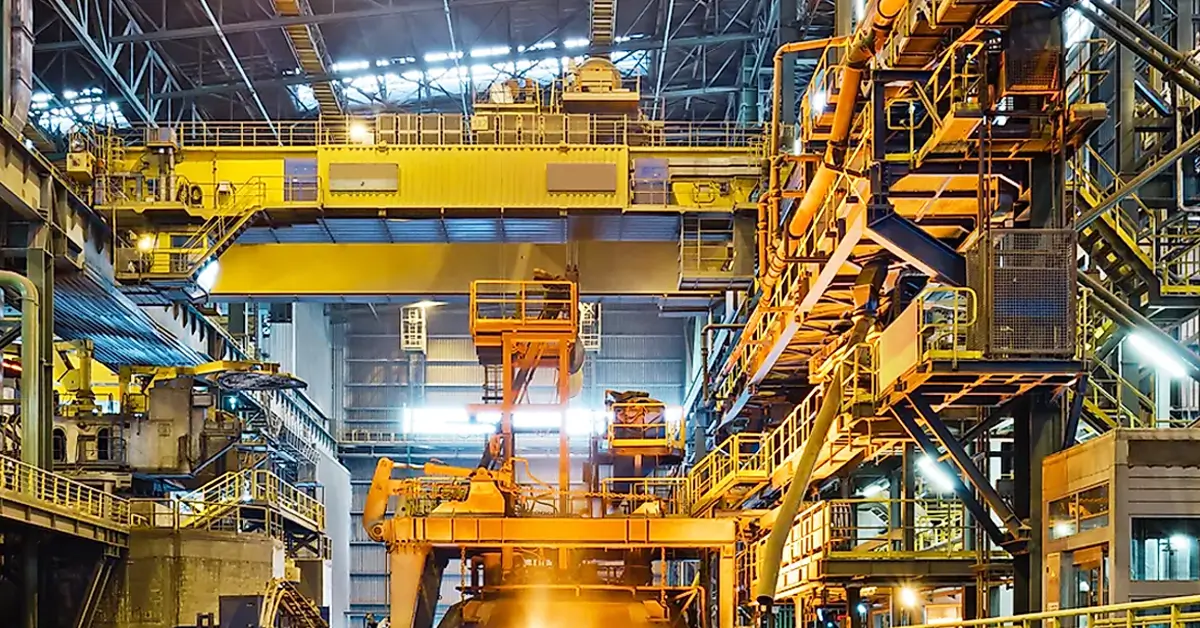
Well-known Steel Factories and Output in China
The narrative of the Chinese steel industry is one of rapid acceleration. After the founding of the People’s Republic of China, the nation embarked on a strategic mission to industrialize. Understanding that steel is the "grain of industry," the government and private sectors began to vigorously develop the metallurgical infrastructure, constructing a large number of steel plants across the country.
What started as a pursuit of volume has evolved into a pursuit of excellence. Today, many china steel mills exert profound influence on the global stage, setting pricing trends and technological standards. While there are hundreds of mills operating across the provinces, a few giants stand out for their sheer scale, history, and contribution to the global supply chain.
The following provides an overview of the conglomerates that are defining the era of modern metallurgy.
Baowu Steel Factory
When discussing the hierarchy of global steel, China Baowu Steel Group sits comfortably at the very top. Formed through the strategic merger of Baosteel Group and Wuhan Iron and Steel Group, Baowu is not just a company; it is an industrial titan. Ranking first among the world’s steel companies, the group serves as the flagship of China's heavy industry.
Baowu operates a network of strategically significant production bases. Its portfolio includes some of the most technologically advanced steel factories in existence, including the renowned Baoshan Steel Plant in Shanghai, the historic Wuhan Steel Plant, and the Ma’anshan Steel Factory. These facilities are known for their ability to produce high-grade automotive sheets and electrical steels that rival any Western manufacturer.
Production Milestones:
2020: Steel output reached 115 million tons, becoming the first group globally to exceed the "100 million tons" benchmark.
2021: Output grew to 119 million tons, a year-on-year increase of 4.35%.
2022: Consolidated lead with a crude steel output of 131.84 million tons.
2023 & Beyond: Baowu maintained its top global position with output exceeding 130 million tons, while shifting strategic focus towards low-carbon metallurgy and hydrogen-based steelmaking.
Shougang Group
Shougang Group represents the resilience and adaptability of Chinese industry. One of the oldest and largest chinese steel companies, it has undergone a massive transformation. Formed by the merger of the original Shougang Company and Tangshan Iron and Steel Company, the group has successfully navigated the shift from urban-centered heavy industry to eco-friendly, high-tech manufacturing.
Shougang is particularly famous for its relocation from Beijing to the coast of Hebei province to ensure a "Green Olympics" in 2008, a move that allowed it to upgrade its facilities to state-of-the-art standards. Today, it owns multiple production sites, among which the Tangshan Iron and Steel Plant stands out as one of Asia's largest and most integrated steel facilities.
Financially and operationally, Shougang remains a powerhouse:
In 2020, statistics showed Shougang’s steel output at 20.412 million tons, an impressive year-on-year increase of 16.28%.
This growth accelerated in 2021, with steel output jumping to 35.43 million tons.
In 2022, crude steel output remained robust at 33.82 million tons. Notably, Shougang is a leader in specialized high-end materials, producing 1.48 million tons of electrical steel used in EVs and transformers.
Angang Group
Angang Group, often referred to as the "Cradle of China's Steel Industry," carries a legacy that dates back to the early days of Chinese industrialization. As one of the five leading steel groups in the nation, Angang is a comprehensive enterprise with significant capabilities in mining, manufacturing, and international trade.
Their primary steel factory is the legendary Anshan Iron and Steel Plant. Through strategic consolidation, the group now also encompasses Benxi Iron and Steel, Yingkou Iron and Steel, and the Tiefa Iron and Steel Plant. This consolidation has allowed Angang to streamline operations and share technical resources across its subsidiaries.
The World Steel Association’s recent data highlights Angang's resurgence:
Annual crude steel output in 2020 was approximately 38.19 million tons.
Following the merger with Benxi Steel, 2021 output surged to approximately 55.653 million tons, catapulting Angang to the third rank globally.
In 2022, production remained stable at approximately 55.65 million tons. Most impressively, Angang ranked first in pig iron output at 26.23 million tons.
In 2023, Angang continued to optimize its production structure, maintaining a top-tier global ranking with output hovering near 55 million tons, focusing heavily on marine engineering steel and railway materials.
The Development and Future of Steel Factories
While Baowu, Shougang, and Angang grab the headlines, the ecosystem is supported by a vast network of high-quality manufacturers. The sheer volume of factory steel produced in China is difficult to comprehend without looking at the aggregate data. The industry has moved from a phase of rapid expansion to a mature phase of "Quality over Quantity."
Here is the breakdown of China's national performance from 2020 through the 2025 forecast:
Historical Data & Future Projections (2020-2025):
2020: China’s crude steel output broke the 1 billion ton barrier, reaching 1.053 billion tons (5.2% YoY increase).
2021: Output remained strong at 1.033 billion tons, despite tighter environmental regulations.
2022: Production moderated slightly to 1.013 billion tons, yet China firmly retained its No. 1 global ranking.
2023: Showing remarkable resilience against global economic headwinds, China's crude steel output held steady at approximately 1.019 billion tons, effectively flat year-on-year (0.6% variance), indicating a stable demand floor.
2024: The industry entered a strategic adjustment period. Estimated annual output is projected to close at approximately 1.01 billion tons. This slight contraction reflects a deliberate government policy to cap output and the market's shift away from real estate dependency toward high-end manufacturing demands.
2025 (Forecast): Industry analysts project a stabilization period with output expected to hover around the 1.0 billion ton mark. The focus for 2025 is not volume growth, but the significant increase in the proportion of special alloy steels and green, low-carbon steel products.
Judging from the annual output of these massive facilities, China’s production maintains a high level that ensures global supply chain stability. However, the story is no longer just about quantity. Behind this productivity is the power to become a global technological leader. From initial establishment to rapid expansion, and now to transformation and upgrading, China’s steel factory infrastructure has reached the world’s leading level in terms of automation and metallurgy.
The Shift to Specialty Steels and Nantian's Role
While giant mills produce construction materials, the manufacturing industry requires something more precise: Tool Steel. This is where specialized brands like Nantian come into play. Steel is not only used in infrastructure but is the critical component in industry, manufacturing, machinery, and precision molding.
As the industry evolves towards 2025, the demand for high-performance alloy steels has skyrocketed. For example, in the automotive and stamping industries, durability is paramount. As one of the premier China Cold Work Tool Steel Manufacturers, Nantian provides materials that withstand immense stress and wear, rivaling European standards.
Similarly, the explosion of the consumer plastics market requires molds that can endure millions of cycles. Nantian has positioned itself as a leader in this niche. Recognized among the top China Plastic Mould Steel Manufacturers, we supply the specialized grades necessary for creating everything from medical devices to electronic housings.
Looking Forward: Green and Smart Manufacturing
Looking forward to the future, China’s steel factories are pivoting. The era of expansion is giving way to the era of refinement. The industry is actively promoting transformation, upgrading, and high-quality development.
Key trends for the 2024-2025 horizon include:
Resource Integration: Mergers will continue to reduce inefficiency, creating mega-conglomerates with better bargaining power.
Technological Innovation: The adoption of Industry 4.0, where AI and robotics manage the blast furnaces to optimize yield.
Sustainable Development: A massive push towards "Green Steel," utilizing hydrogen metallurgy and electric arc furnaces to reduce carbon footprints, aligning with global carbon neutrality goals.
Through strengthening international cooperation and focusing on high-value products, Chinese steel aims to achieve stable growth and move towards a greener, sustainable future. The goal is to transform China from a steel giant into a steel powerhouse—strong not just in size, but in capability and responsibility.
Summary
China's evolution from a developing industrial nation to the world's leading steel superpower is driven by the colossal output and modernization of giants like Baowu, Shougang, and Angang. With annual crude steel production stabilizing around the 1 billion ton mark from 2023 through 2025, Chinese mills serve as the bedrock of the global economy.
However, the future lies in specialization and quality. Alongside these massive conglomerates, specialized suppliers like Nantian are essential for providing the high-grade tool and mold steels that power precision manufacturing. By combining scale with specialized metallurgical expertise, the Chinese steel industry is poised to lead the world in both volume and innovation for decades to come.